my-app
D:\Sites\my-app
Alepou wraps Claude Code, Codex CLI, and Gemini CLI — plus a shell and any local CLI you add as a custom launcher — in a project-owned workspace. Memory, plans, tasks, Preview tabs for running local web apps, bridge snapshots, and git-linked audit history stay beside your code.
BYO CLI · no API keys · not SaaS · works with your existing subscriptions
D:\Sites\my-app
D:\Services\api-server
D:\Sites\docs-site
http://127.0.0.1:8788
Safe mode and auto-refresh are controlled here.D:\Backups\Alepou
Snapshots store commit, branch, dirty state, and note.See what is actually alive, not just what you launched.
permission presets and custom auto-approve patterns
model, reasoning effort, and Windows sandbox defaults
toggle experimental capabilities without leaving the app
Roll back any task commit from here — gated by typing CONFIRM, never by one stray click. The rollback itself becomes a new commit, so the trail never loses an entry.
Each codebase gets its own card — launchers, live sessions, ports, git, and backups grouped under the right repo.
Sessions stay attached to the right repo, named and reachable — from the desktop or the phone remote.
File-backed planning lives beside your code under plan/ — continuity from session to session, nothing hidden in SaaS memory.
Sequential or parallel runs on the subscriptions you already have — every completed task ends in a git commit, the watchdog catches stalls.
One question goes in once; Claude, Codex, and Gemini answer without seeing each other, then a supervisor synthesizes the strongest plan.
A real run, condensed
A real supervised orchestration run, trimmed from about 27 minutes to under four. The idle stretches are cut and captions explain each step, but the run itself is real and in order: nothing staged or reordered. A supervisor model reads the plan and task board, dispatches a worker, reviews each git diff, and advances the queue while the watchdog catches stalls. No human intervention after the run starts.
Why the coordination layer is the cheap half of the bill
The supervisor spends almost all of its tokens reading — project memory, the task board, worker diffs, run state — and very few writing: short dispatch and verify decisions. On every model, input tokens are far cheaper than output — on current frontier pricing, generated output runs on the order of five times the price of input — and repeated reads are discounted further by prompt caching. So the expensive work, generating code, happens on the worker, which can run on a cheaper model or your own flat-rate subscription. The layer that keeps the whole run coordinated is structurally the cheap one.
Why it is different
Cursor, Windsurf, and Antigravity are editor-first agentic environments. Alepou is different: it is a local workspace around the CLI tools and project files you already use.
Claude Code, Codex CLI, and Gemini CLI sessions stay as real local processes — alongside a built-in shell and any other local CLI you add as a custom launcher. Alepou groups them by project and gives them file-backed plans, memory, inboxes, and tasks — one connected agent working in a project-owned workspace. When you want to scale, a supervisor model can keep the queue moving while workers execute in their normal terminals.
A newer wave of agent orchestrators — Conductor, Superset, Agent Deck — groups the same CLIs behind parallel worktrees and run dashboards. Alepou's model is different: one task, one commit, in your real working tree, with memory, plans, and audit history as plain files in your own repo. When Vibe Kanban shut down in April 2026, its users had to migrate their workflows out. If Alepou stopped tomorrow, everything it knows would still be sitting next to your code.
You keep your editor. You keep your official CLIs. You keep your subscriptions. Alepou gives the surrounding workflow a local control plane.
Alepou keeps project memory, tasks, plans, and handoffs in local files, then gives the model a bounded map of the current state when a session starts. The goal is not to stuff more into the prompt; it is to stop wasting context on rediscovery.
Starts each workspace session with a bounded map of the project instead of making the model rediscover it.
Wraps official CLIs instead of replacing them.
Project files and planning state stay on your machine.
Sessions, tasks, docs, memory, ports, Git, and backups live under the same project.
Plans and task state are plain files, not hidden service memory.
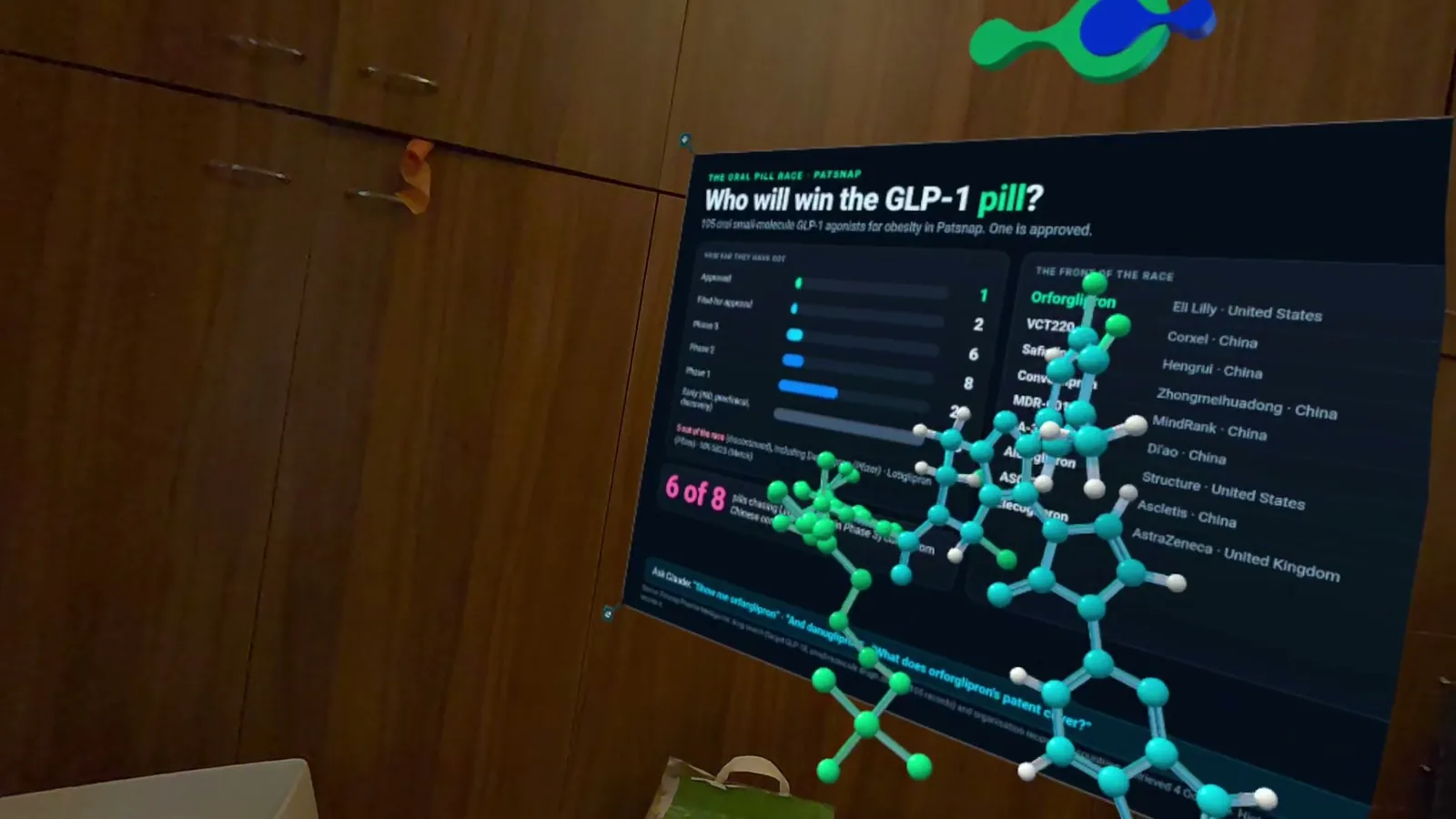
Preview watches running web apps, and shipped bridges expose local tool state back into the same planning center.
Every completed task ends in a git commit, with the SHA recorded on the task entry. Click through to inspect the diff.
Plans, memory, tasks, and history are plain files and git commits in your repo. Nothing to migrate out of, ever.
Supervisor and worker queues are built in for when one agent isn't enough — opt-in, not the default posture.
Monitor and manage the same live sessions over LAN or Tailscale.
What it actually does
git show output. The audit trail is plain git in your own repo, so git log, git revert, git blame, and CI hooks all apply as-is. A dedicated History tab shows the day-grouped timeline of every AI commit — click any entry for the full diff, revert with a typed confirmation.Audit trail
Every tool in this space will eventually face the same question from a security review or a compliance office: “Show me every change the AI made, who approved it, and undo the third one — without losing the record.” Alepou is built so that question has a boring answer.
Each completed task records which agent did the work, and the commit SHA is written back onto the task entry. git blame resolves to a task, an agent, and its planning context.
The record is created by the completion flow itself — commit first, SHA onto the task — not reconstructed later from chat logs.
Undo requires a typed confirmation and lands as a new commit. The trail is append-only: the rollback is itself an auditable event.
No proprietary history store. git log, git show, CI hooks, and your existing review tooling inspect the AI's work with zero adaptation.
Alepou is not a validated compliance system and does not claim to be one — but teams in regulated environments will recognise the shape.
One project-owned system
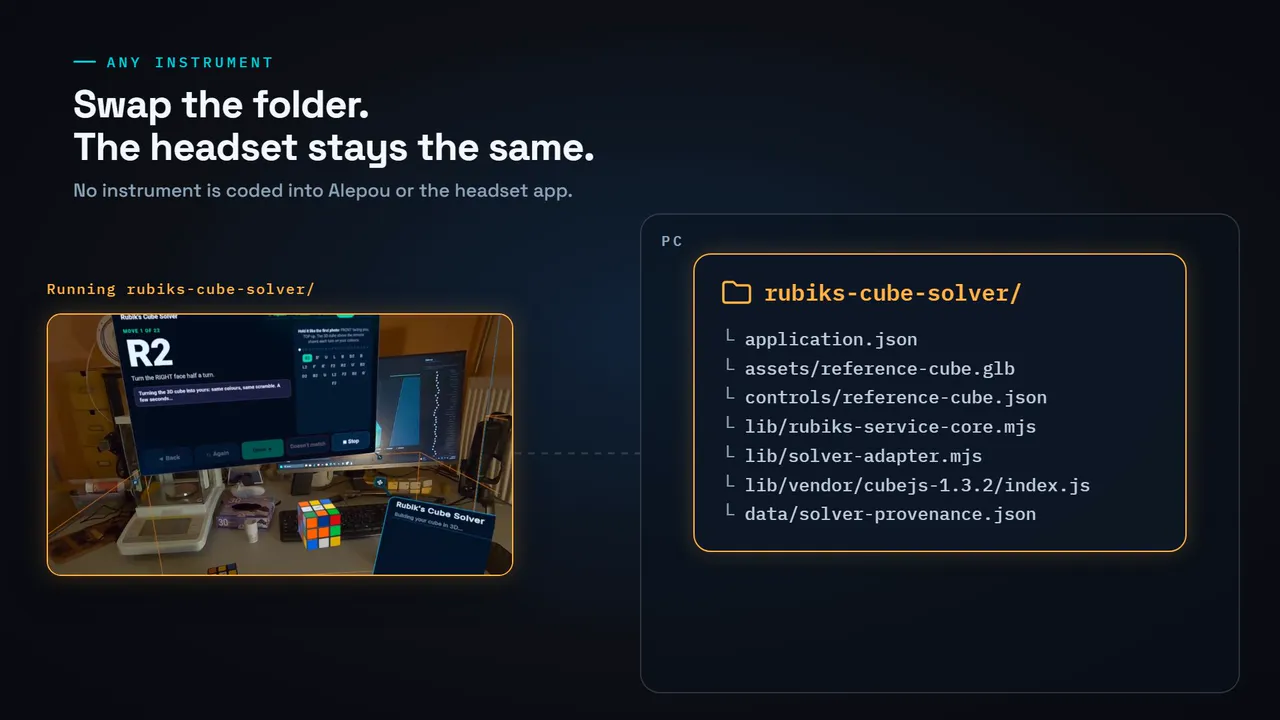
Use Alepou on its own, add Canvas when the work needs a visual stage, or install Unity Bridge when the important project state lives inside the Unity Editor. Each surface remains local, inspectable, and independently useful.
Manage real CLI sessions around one project-owned workspace: plans, memory, tasks, previews, orchestration, runtime state, and a git-linked audit trail.
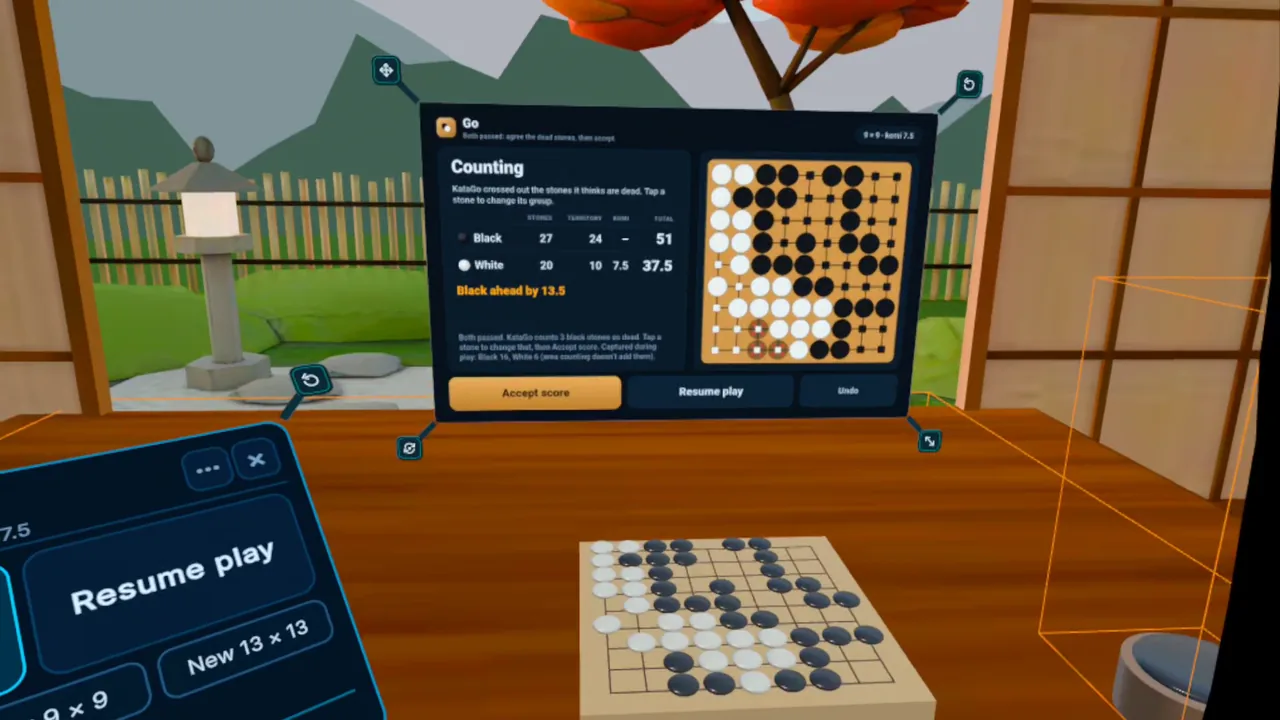
Explore the control planeCreate websites, presentations, documents, interfaces, and games as structured visual projects. Design with AI, compile into editable elements, then keep refining on the canvas.
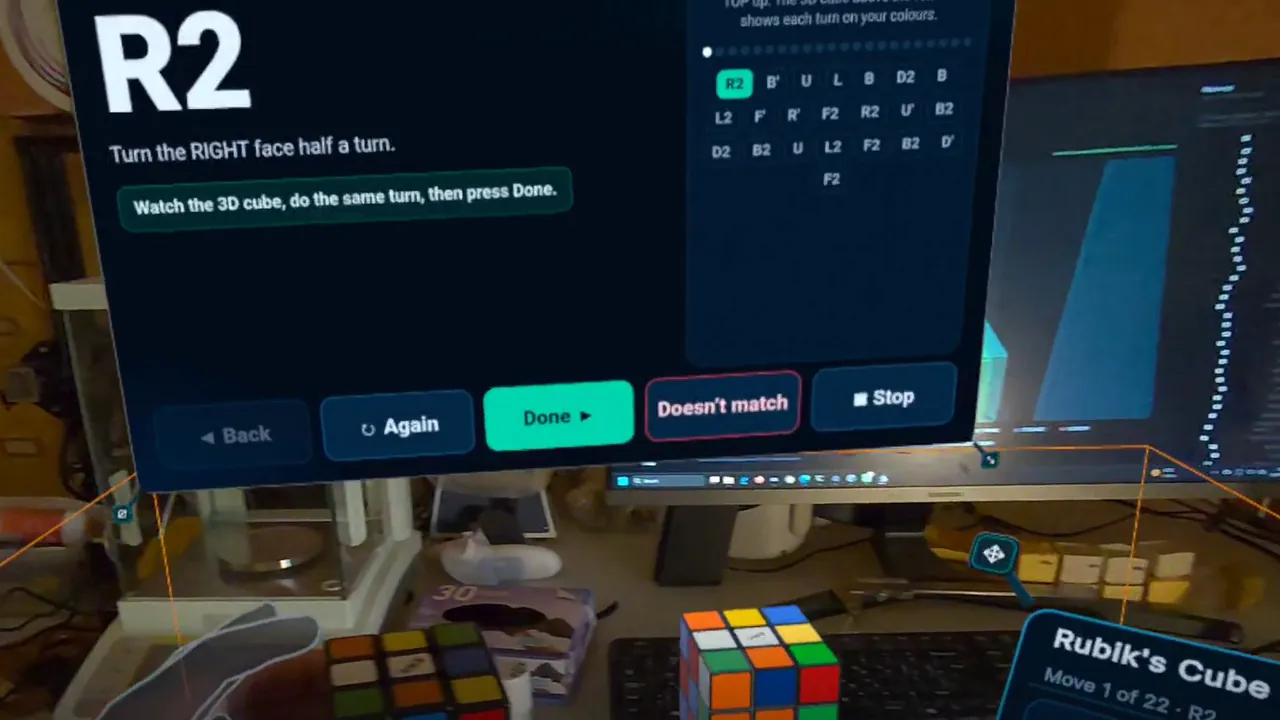
Explore CanvasGive Alepou-managed agents bounded access to live Editor state, typed authoring, compile barriers, tests, builds, runtime capture, and separately granted Quest device work.
Explore Unity BridgePhone remote
You started a refactor at your desk. Your phone shows you it is still running and lets you steer from wherever you are.
Phone remote is a paid companion app — $2.99 one-time, coming to Google Play. Desktop core is free and open source (Apache 2.0).
Deliberation and orchestration
Orchestration is for work bigger than one sitting: a supervisor model reads your plans and task board, dispatches workers, reviews every diff, and keeps the queue moving — overnight if needed. Workers on your existing flat-rate subscriptions add no marginal cost; add more in parallel when wall-clock speed matters.
Round 1: each model responds without seeing the others. Round 2 onward: each sees the full transcript and refines. A supervisor synthesizes agreements and open questions. Iterate until consensus, or a clear disagreement that tells you something real.
The architecture of this product was designed using deliberation mode. Three models debated structure and tradeoffs across multiple rounds before any code was written.
The supervisor reads your project memory and task board, writes precise instructions for the worker, and dispatches. The worker executes and commits. Supervisor reviews the git diff and assigns the next task. Repeat until the queue is empty — or the watchdog fires because something went wrong and needs your attention.
Honest note: a bounded job that fits one context window is often best served by a single strong session. Orchestration earns its keep when the queue outlives a sitting — endurance, parallelism, and watchdog recovery.