BLENDER EXTENSION 0.7.1 · ALPHA

Research it.
Build it natively.
Prove the result.

Alepou gives a project-bound AI session an inspectable way into Blender: real source research, native scene authoring, exact geometry queries, deterministic visual evidence, focused repairs, and accepted .blend artifacts.

Not text-to-mesh. Not a one-prompt asset generator. The retained source scene stays editable in Blender.

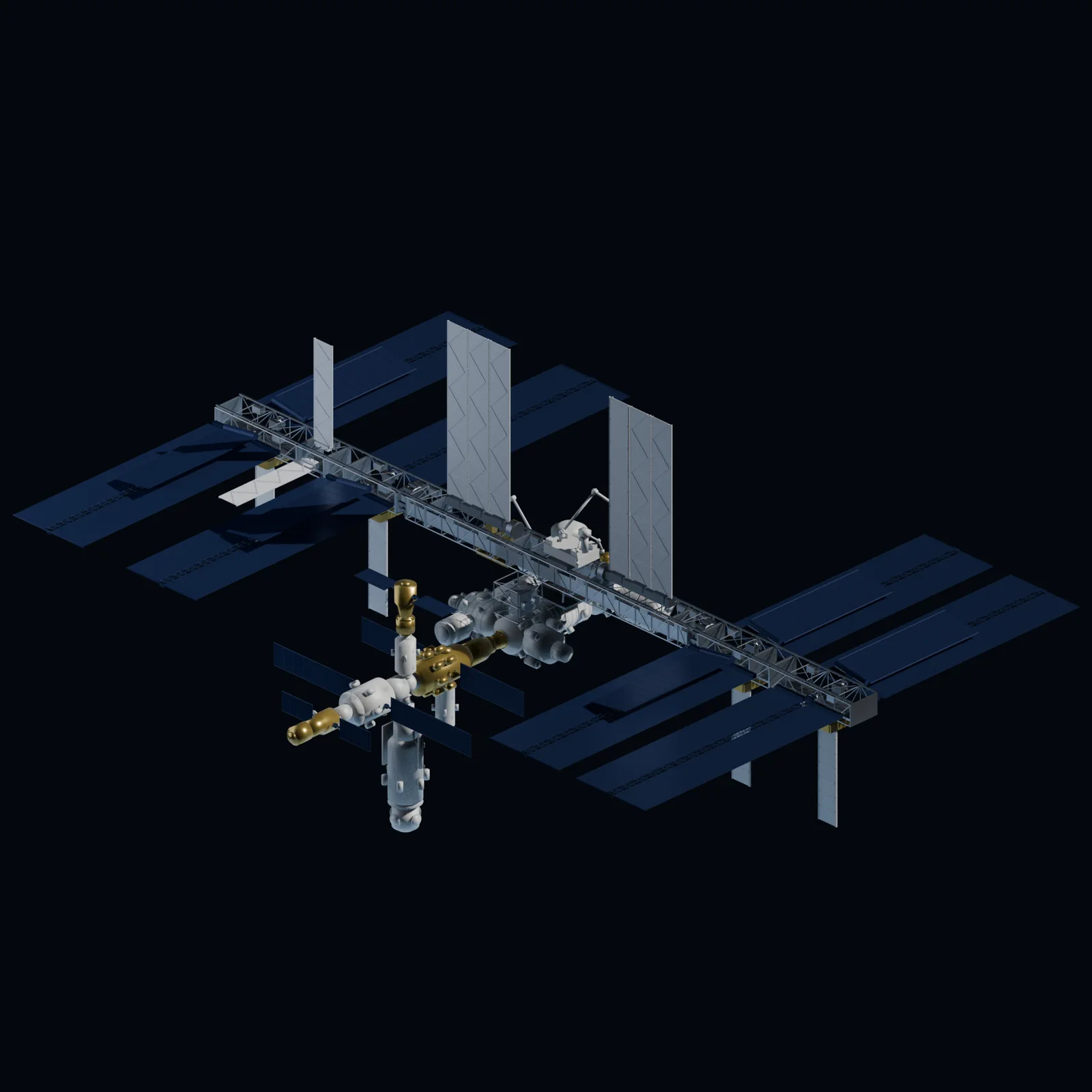
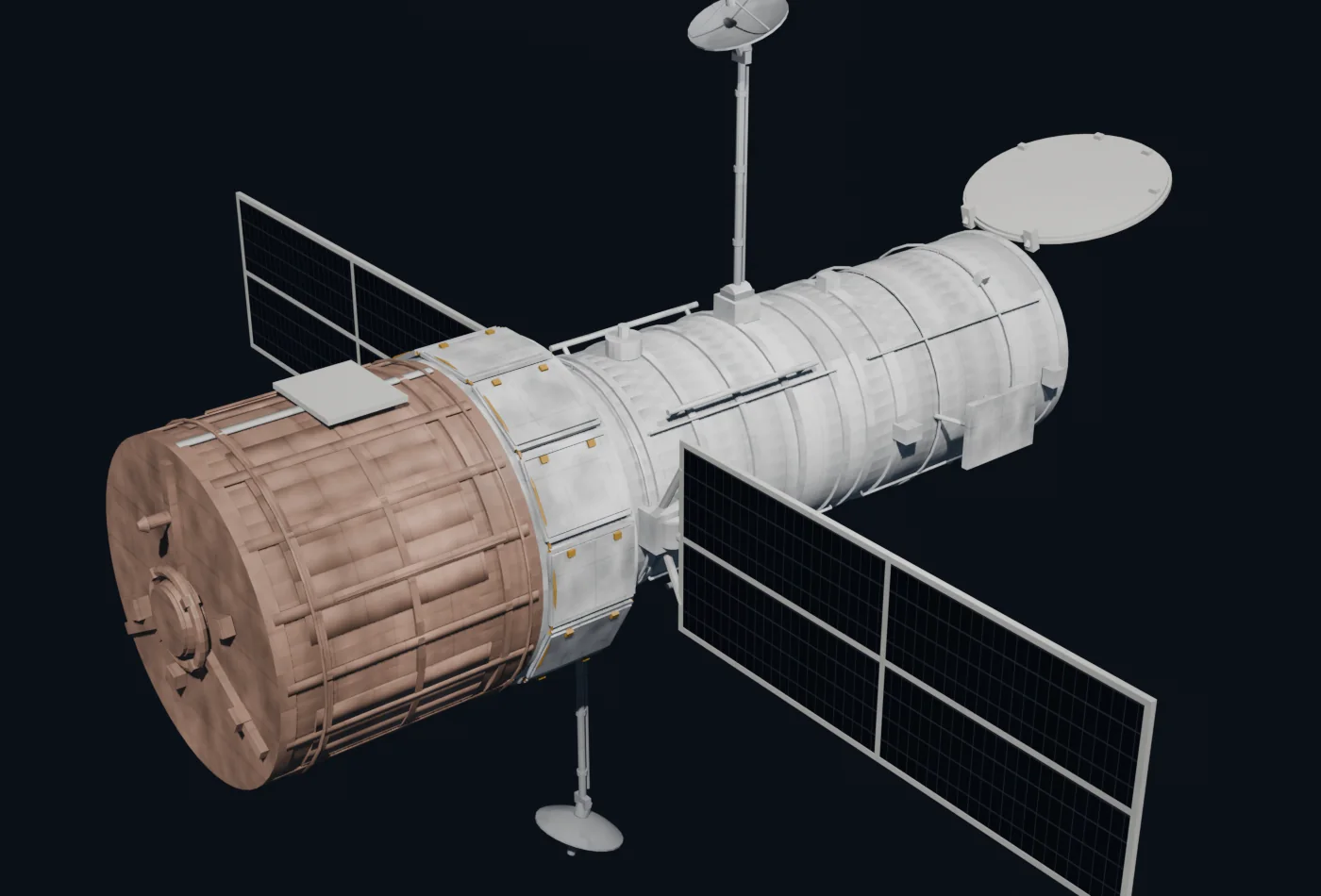
A full researched reconstruction of the International Space Station, with long trusses, eight solar array wings, radiators, laboratory modules, Russian segment, robotic arm, and docking structures visible against a dark studio background.
ISS · 2011 assembly-complete configuration Separately authored components · assembled after acceptance
INPUTResearch + project plans
AUTHORINGNative Blender scenes
VERIFICATIONExact state + rendered views
OUTPUTAccepted, editable artifacts

What actually happens

The agent does the modelling work. The bridge makes the work observable.

The bridge is not a hidden generator. It connects a durable Alepou task to a visible Blender session, records what ran, and gives the worker enough exact and visual evidence to judge what it made.

  1. 01

    Research the real subject

    Find strong sources, freeze the exact variant and date, record dimensions, construction clues, and honest unknowns.

  2. 02

    Plan by attention need

    Split a complex object into meaningful component tasks. Assembly comes after accepted parts, not before them.

  3. 03

    Open a bound Blender session

    Alepou can launch or connect to the project’s Blender instance and establish a fresh, session-owned authoring contract.

  4. 04

    Author with native tools

    The worker chooses Blender Python, BMesh, modifiers, curves, materials, collections, empties, or other native techniques appropriate to the asset.

  5. 05

    Inspect exact and visual state

    Bounds, mesh statistics, distances, alignment and intersections sit beside clay, silhouette, wireframe and studio views.

  6. 06

    Repair, accept, and hand off

    Concrete defects are revised until the evidence holds up. The accepted source artifact is saved for later project tasks and Unity assembly.

A real rejection, not a victory lap

The first calculator was the wrong calculator.

The first direction was overexposed, too modern, and did not establish the exact model. It was rejected. Research then locked the December 1998 Casio HR-170LB GYB, including its published 162 × 271 × 61 mm dimensions, before the asset was rebuilt and checked again.

ONE ASSET · THREE CHECKPOINTS

Casio HR-170LB GYB

The same frame moves from a rejected generic direction to inspected native geometry and the accepted reconstruction.

100%
An overexposed first-pass printing calculator render with most of its body and keys blown out to white.

Rejected — wrong direction.Exact identity unproven · form too modern · lighting hid the surfaces.

162 × 271 × 61 mmPublished bounds · controls · paper path · topology

The acceptance record keeps the limitations too: this is an exterior production reconstruction, not a claim that undocumented internal mechanisms were invented correctly.

The difference is focused attention

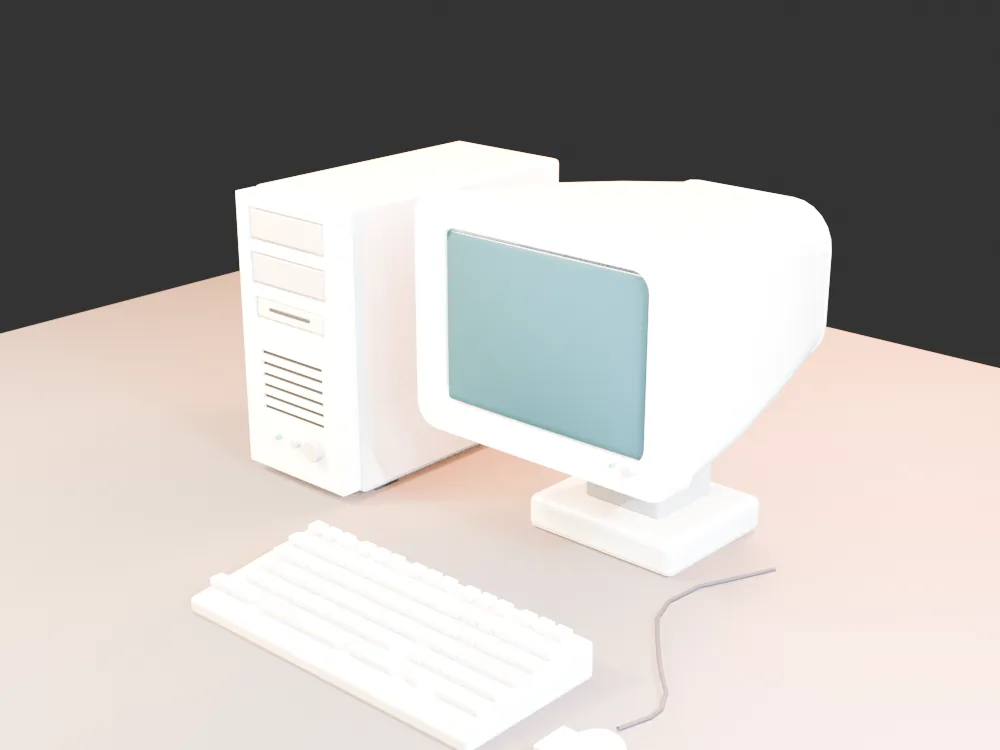
The same workstation brief. A very different result.

A broad task produced a recognisable but generic computer. The later workflow researched the mouse, keyboard, display and tower as separate subjects, accepted each component, then assembled the workstation.

An early broad-task Blender workstation with a generic white tower, CRT monitor, keyboard and mouse on a bright background. BROAD TASK
One task, divided attentionThe category is readable. The specific late-1990s products and construction are not.
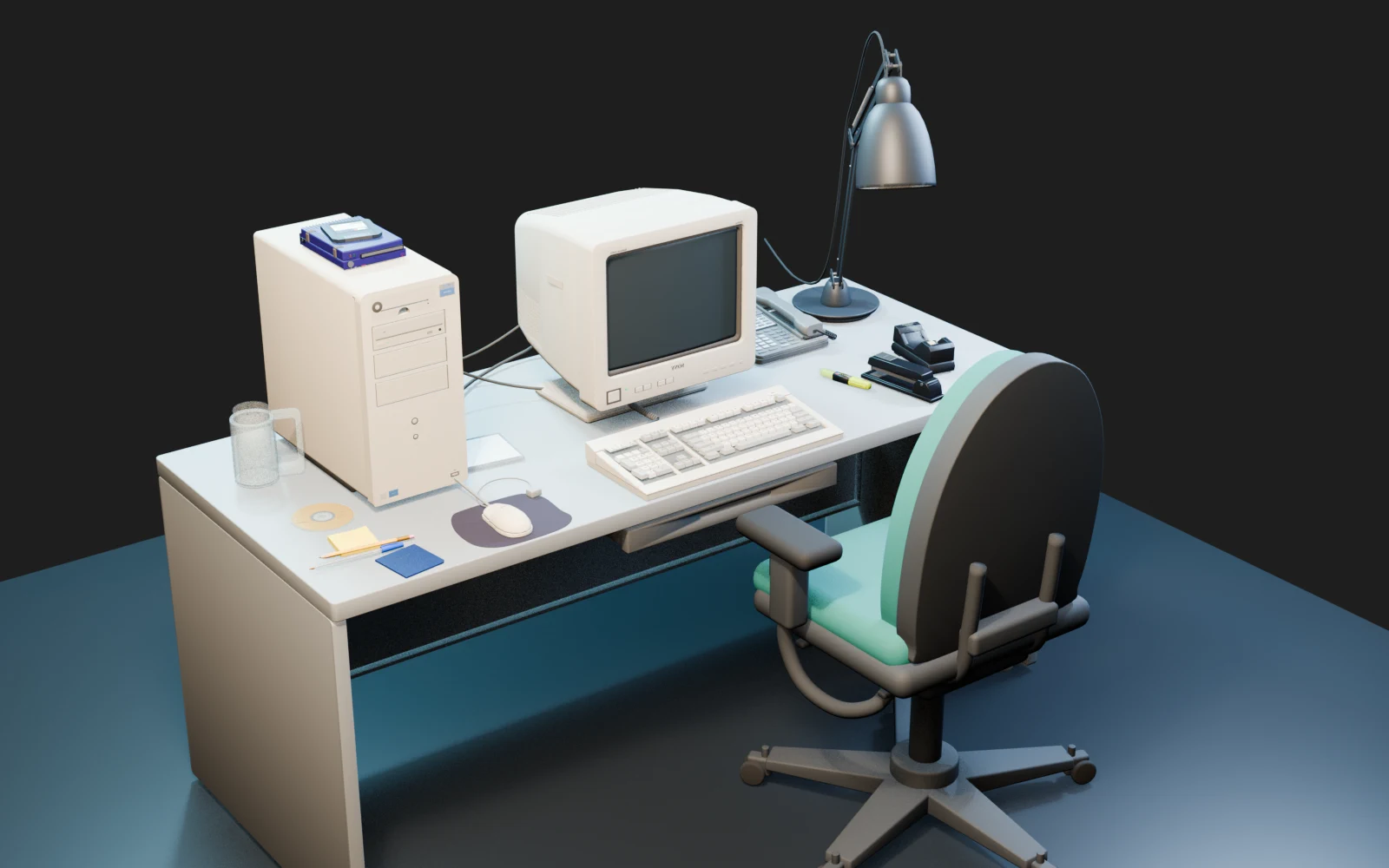
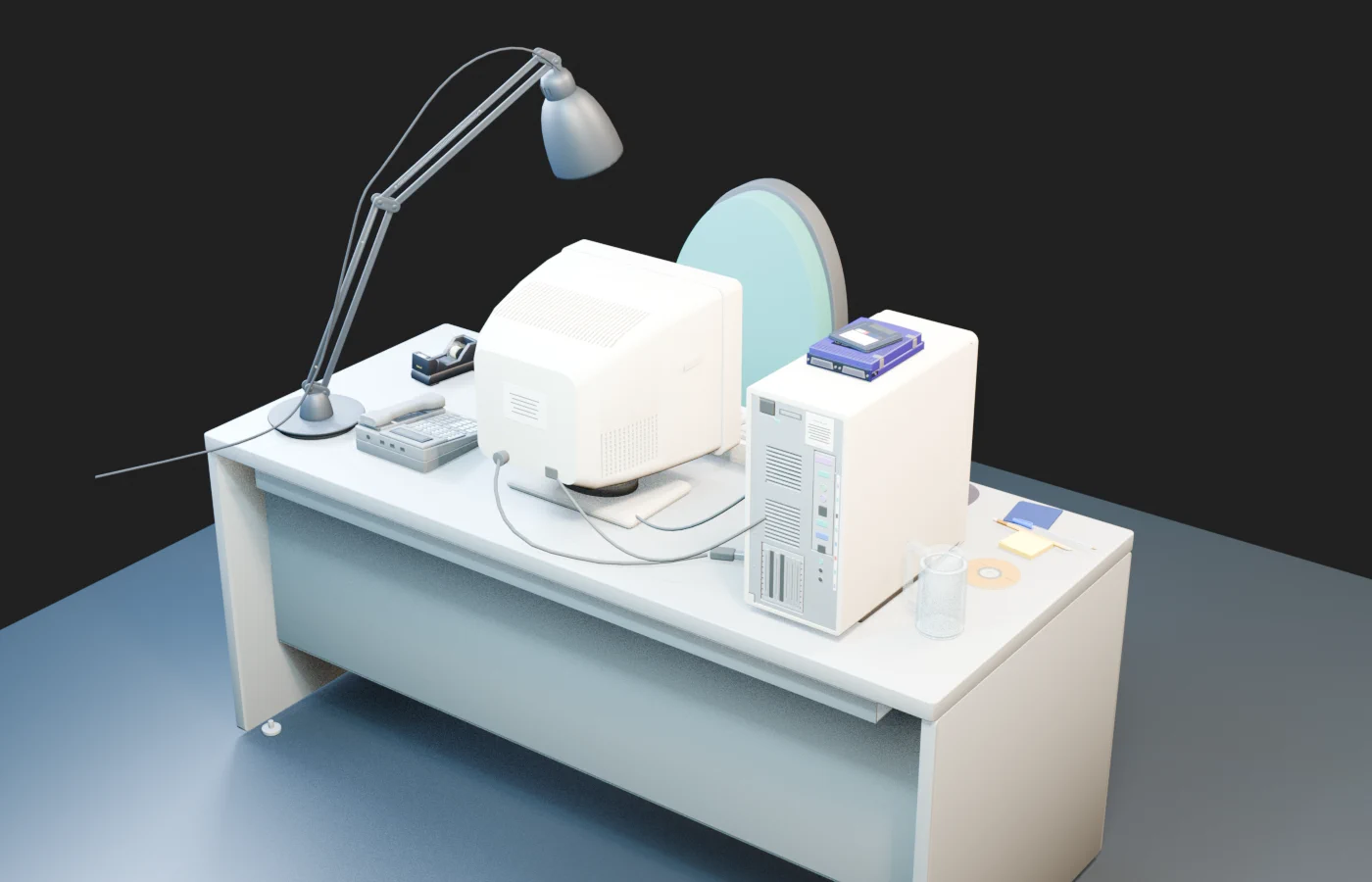
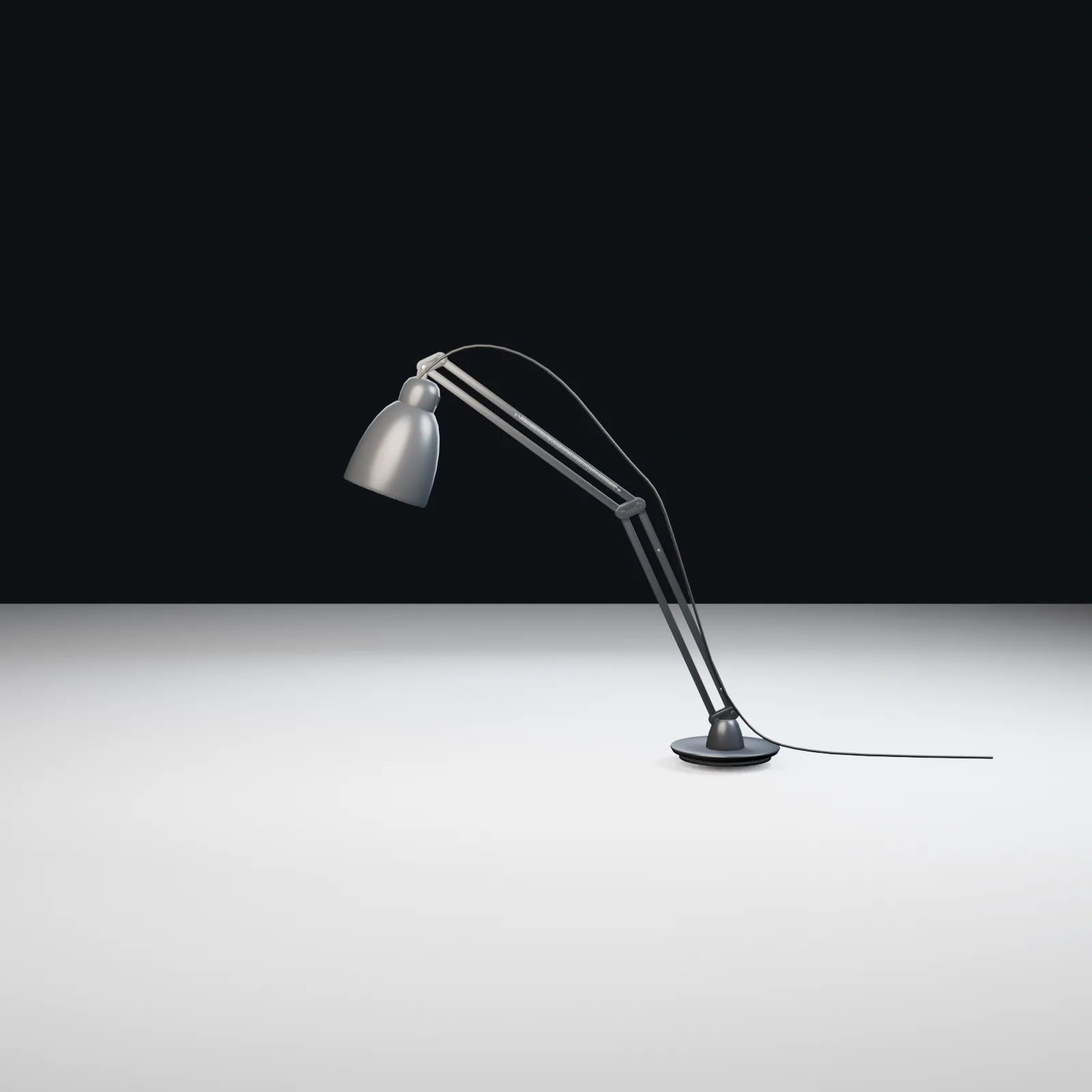
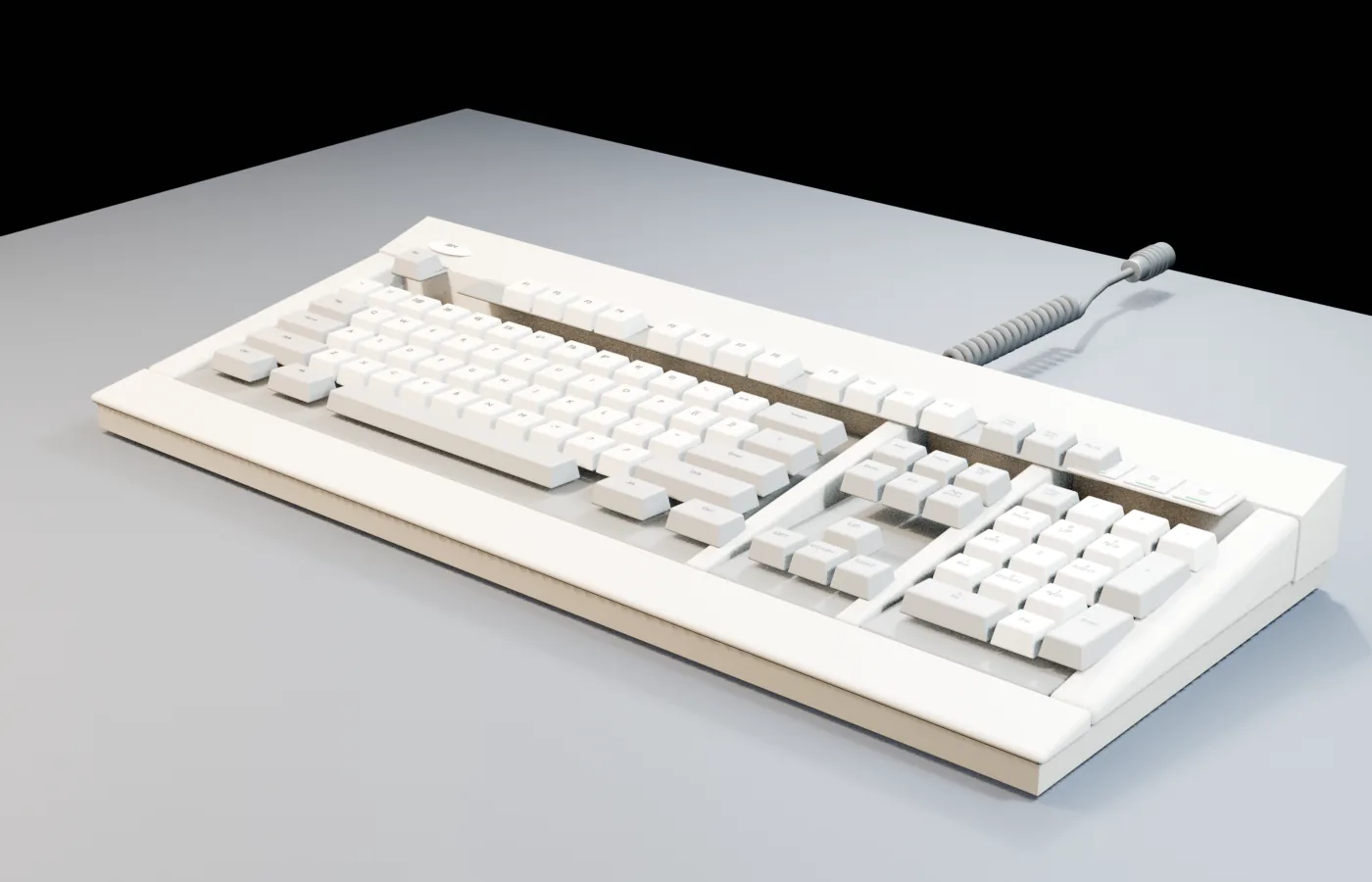
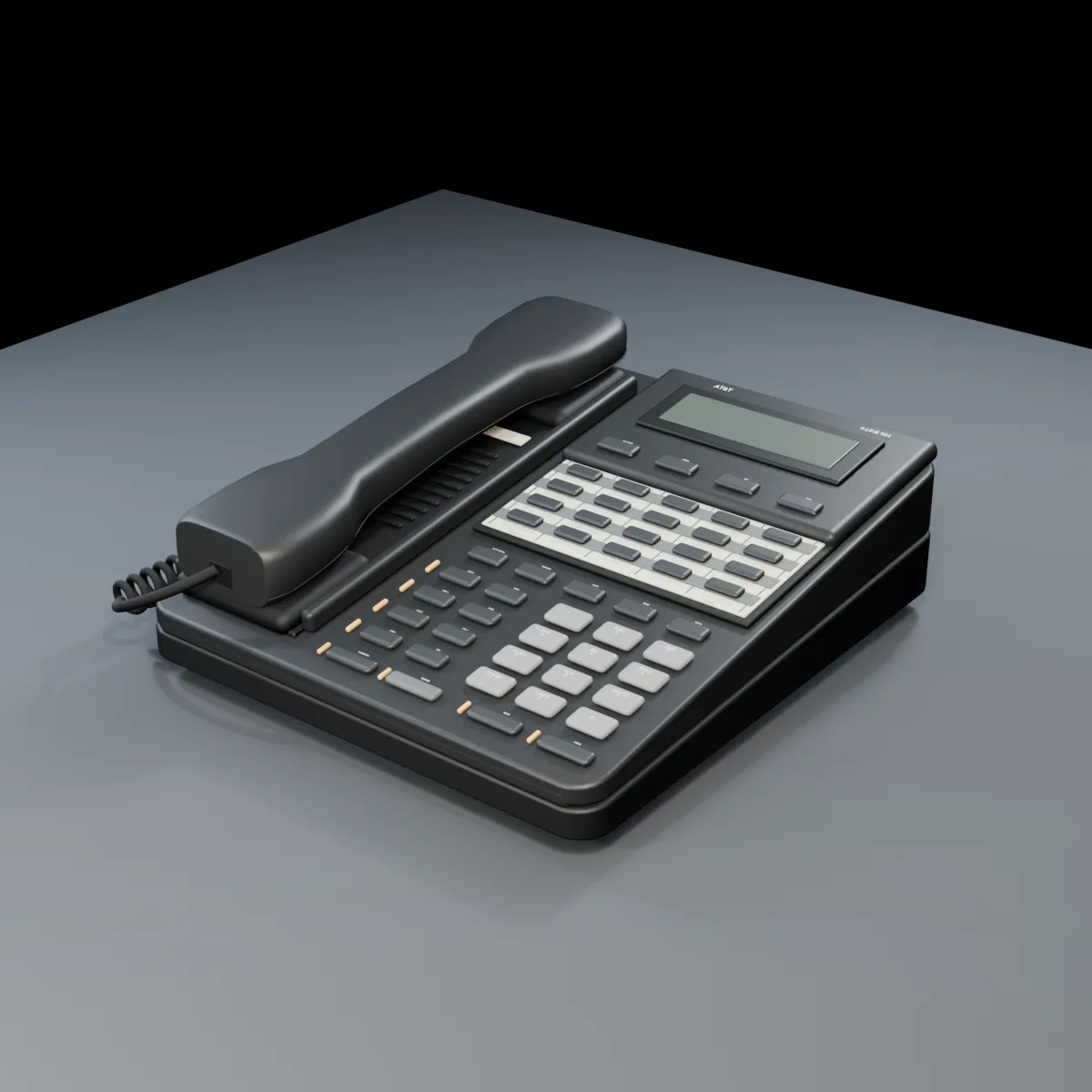
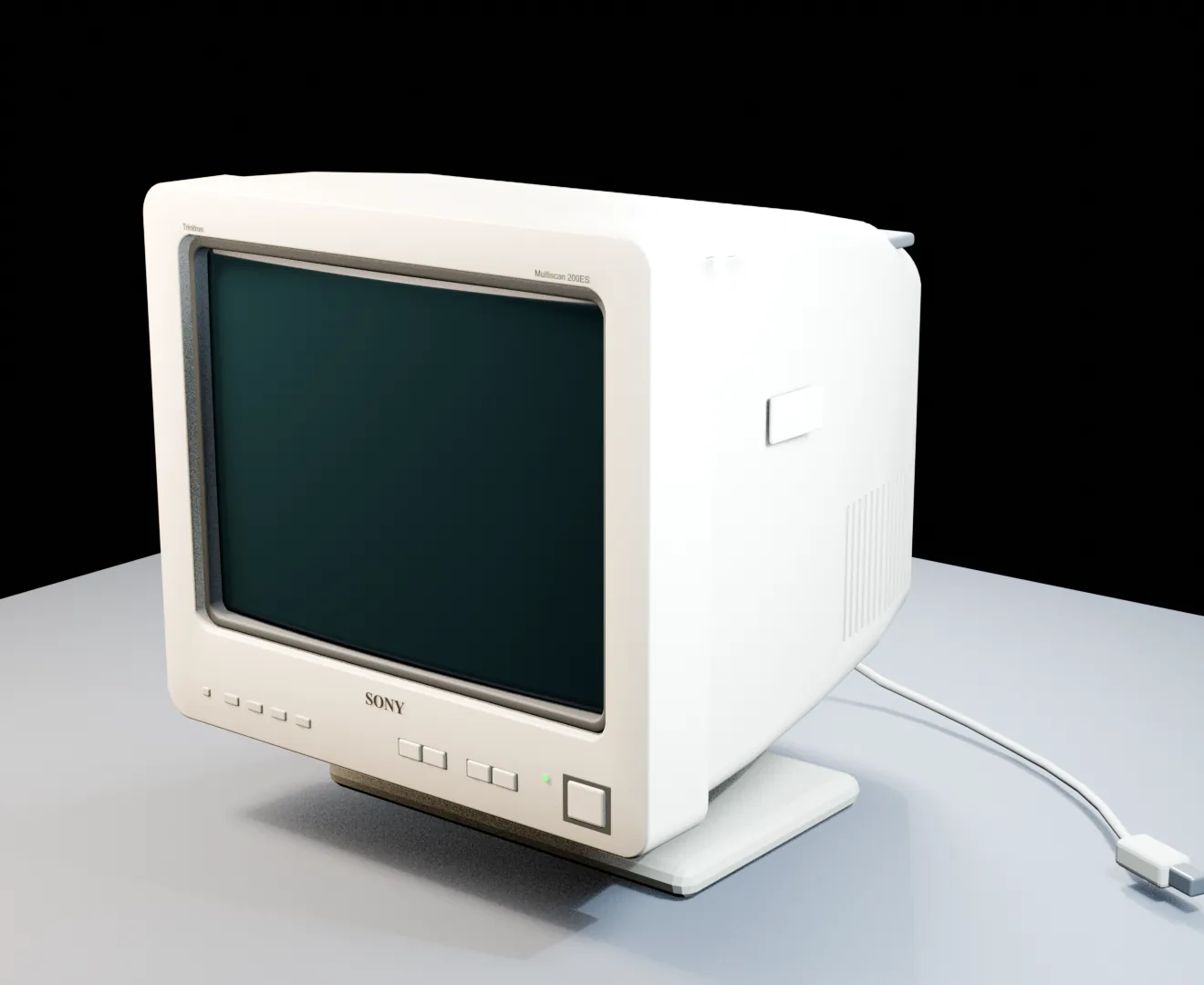
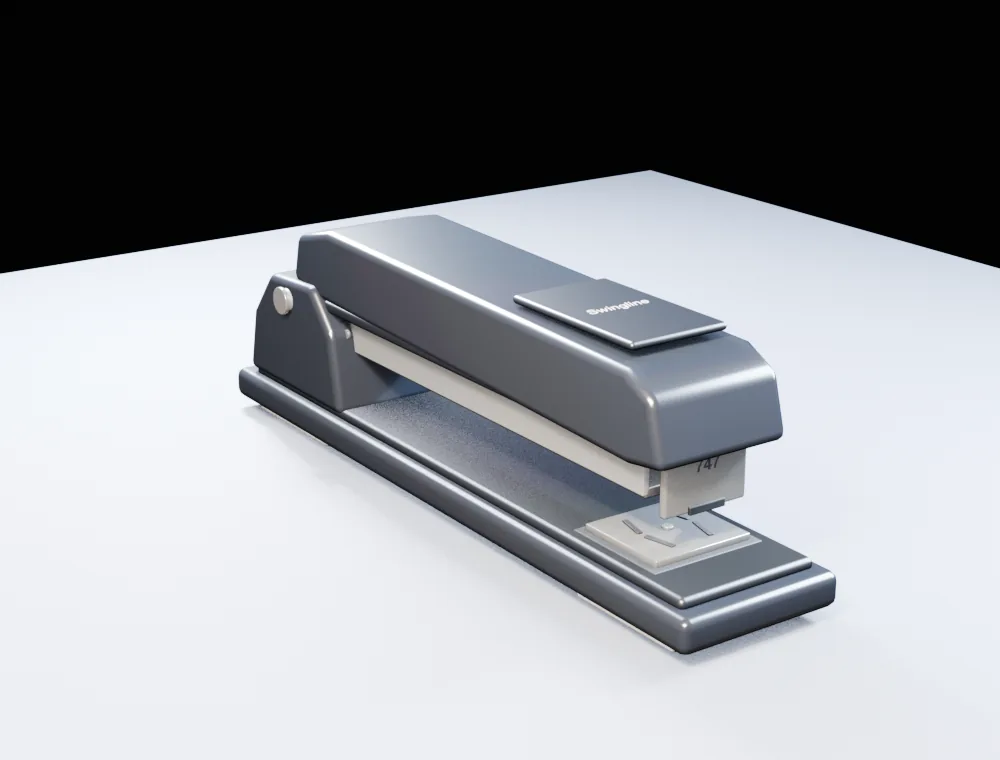
The accepted front-facing 1990s office desk vignette assembled from researched LOD0 components, including the desk, office chair, Dell OptiPlex GX1, Sony CPD-200ES monitor, IBM Model M keyboard, Microsoft Mouse 2.0, lamp, telephone and desk accessories. FOCUSED COMPONENTS
Research, component tasks, then assemblyDell OptiPlex GX1 · Sony CPD-200ES · IBM Model M · Microsoft Mouse 2.0

This is production evidence, not a controlled benchmark. Prompts, research, iteration and presentation evolved too. Both scenes were authored natively in Blender; the stronger result came from sources, task decomposition, exact and visual review, and protected assembly.

The Unity scene, rebuilt as a web exhibit

Orbit the accepted LOD0 desk assembly.

This is the actual researched production geometry, reassembled from the Unity scene contract and exported from the accepted Blender source. It is not a generated mesh, a lower LOD, or a flattened turntable.

90S OFFICE · ACCEPTED WEB ASSEMBLY

Workstation and desk vignette

Front-facing hero by default. Orbit for the sides and rear; switch to wireframe to inspect the same geometry.

Accepted front-facing studio render of the complete researched 1990s office desk vignette.
797,218browser triangles
598mesh primitives
LOD0 ONLYno mesh simplification
45.95 → 12.1 MBMeshopt transfer encoding

Poster preview · the complete model loads only when requested

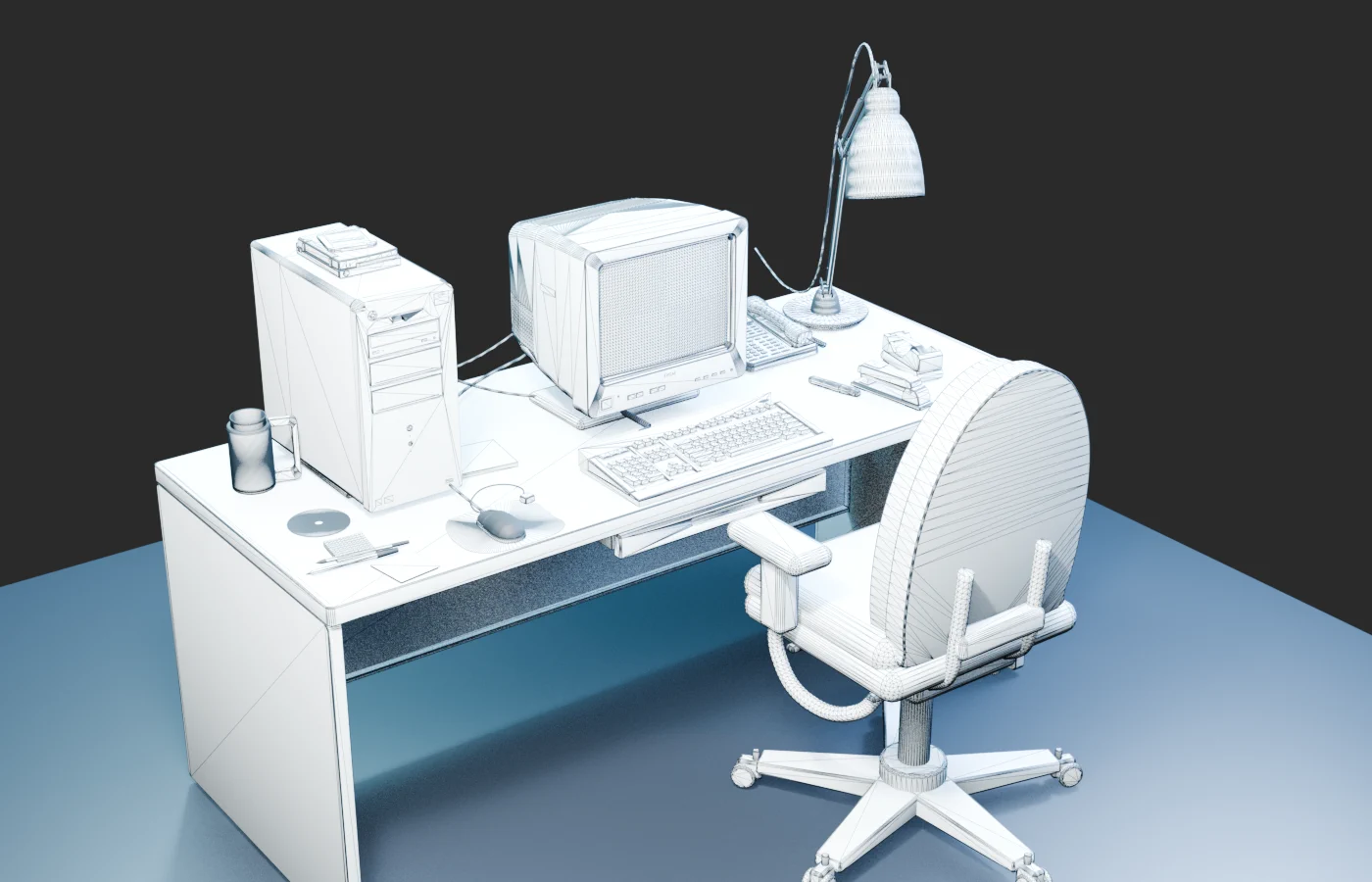
Front wireframe evidence render of the accepted 1990s office desk vignette, showing topology across the desk, chair, computer equipment, lamp, telephone and accessories.
Front topology evidenceA readable material-based wire pass across the accepted assembly.
Deliberate rear assembly evidence view of the accepted desk vignette, showing the backs of the Sony monitor and Dell tower, cable routing and the underside relationships of the workstation.
Rear assembly evidenceA deliberate one-off inspection angle for backs, cables and hidden relationships.

The freestanding organiser visible in the wider Unity room remains preserved in the source project, but it is excluded from this desk exhibit because it is not part of the workstation composition. The rear image is evidence, not the default hero angle.

One project, many accepted components

The ISS was planned before it was assembled.

The reconstruction targeted the 2011 assembly-complete station. NASA sources fixed the configuration and real scale. Component tasks covered the truss, arrays, radiators, nodes, laboratories, international modules, Russian segment, mobile servicing system, game hierarchy and LODs.

Visual and exact review found real problems: truss proportions, weak array span, radiator attachment, docking interfaces, overlapping modules, an upside-down Cupola, Russian-segment collisions, and an undersized Canadarm. Those defects were repaired before the master artifact was accepted.

106.8 mmeasured station span
82mesh objects
60named interfaces
12 / 12final sanity checks
PROJECT PLANISS / ACCEPTED COMPONENTS
  • 12

    Reference lock + scale basis

    DONE
  • 14

    Integrated truss structure

    ACCEPTED
  • 15

    Solar array wings + masts

    ACCEPTED
  • 16–22

    Modules, nodes, robotics + interfaces

    ACCEPTED
  • 23

    Master assembly + exact checks

    12 / 12
  • 24

    Final lighting, materials + evidence

    DONE

When one Blender session closed before the scene was saved, the recorded component scripts made recovery possible. The scene was rebuilt from the audited authoring record rather than guessed back into existence.

Local, inspectable architecture

Enough freedom to model. Enough structure to know what happened.

A project carries a compact file contract under plan/blender/. Observations are bounded and mutations are recorded. Blender executes authoring work from its main-thread timer, while Alepou tracks the originating session, terminal result, recovery state, and evidence.

Local Trusted Development is powerful delegated authority, not a security sandbox. It belongs on trusted projects with version control, explicit session ownership, and acceptance based on evidence rather than a successful command alone.

Read the bridge architecture
PROJECTplan / blender
HEALTHbridge-health.jsonfreshness + ownership
MAPscene-summary.jsoncompact scene state
READqueries/pending/bounded observation
WRITEcommands/pending/recorded mutation
RESULTapplied · failed · rejectedterminal outcome
RESEARCHAUTHORINSPECTREPAIRACCEPT

Alepou Blender Bridge

Build the asset. Keep the source. Show the evidence.

Blender remains Blender. Alepou adds durable project context, controlled access, recorded execution, and a review loop that can survive long-running work.