Mushroom March
One puzzle game, built first for a phone and then reimagined as a diorama you can place in your room.
The mobile game was made through Alepou Canvas. Its design and code then became source material for a separately implemented Quest 3 experience, built in Unity through the Alepou Unity Bridge.
Not a one-click port.
A creative translation.
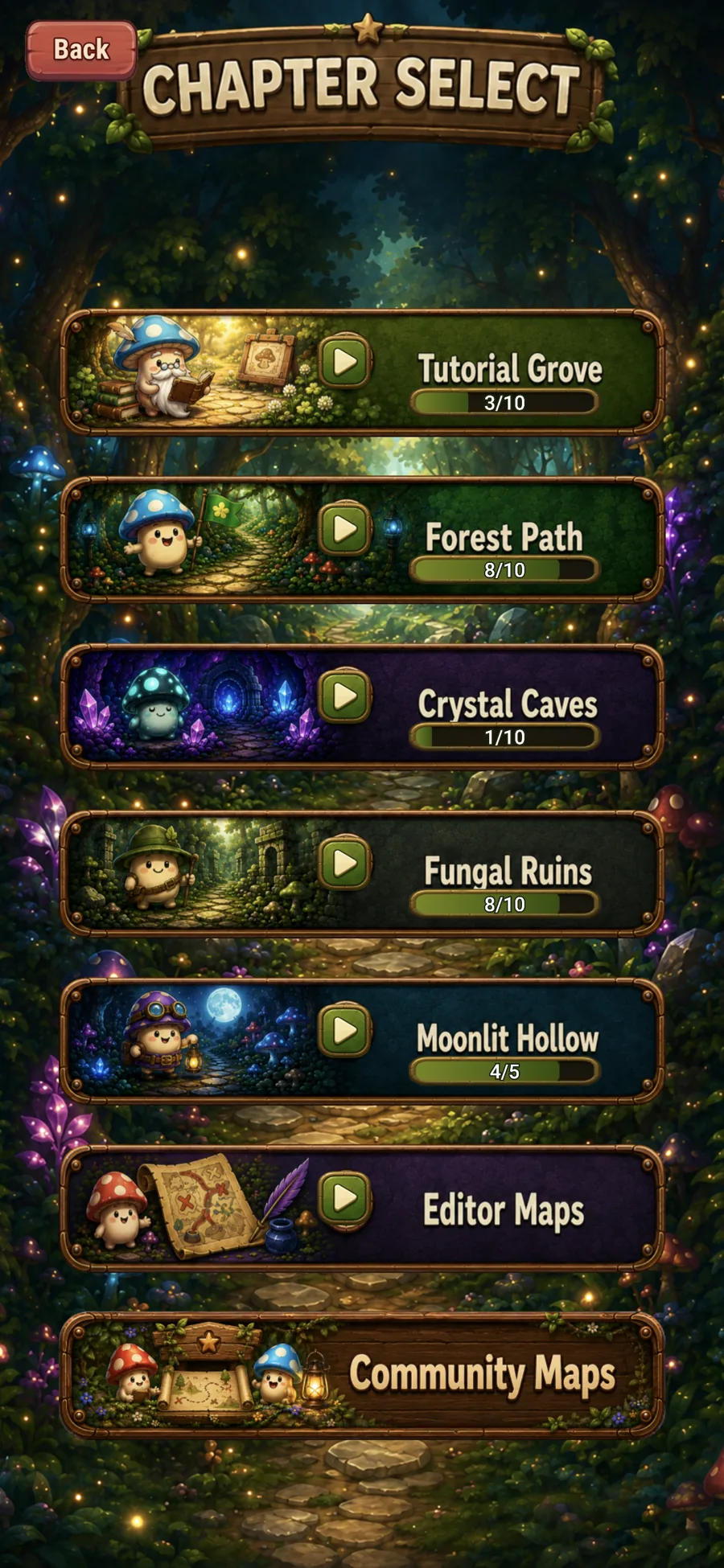
Mushroom March began as a compact puzzle game: plan a route, place the available tools, then send a line of tiny mushrooms towards the exit. Canvas provided the environment for shaping the phone experience and its visual identity.
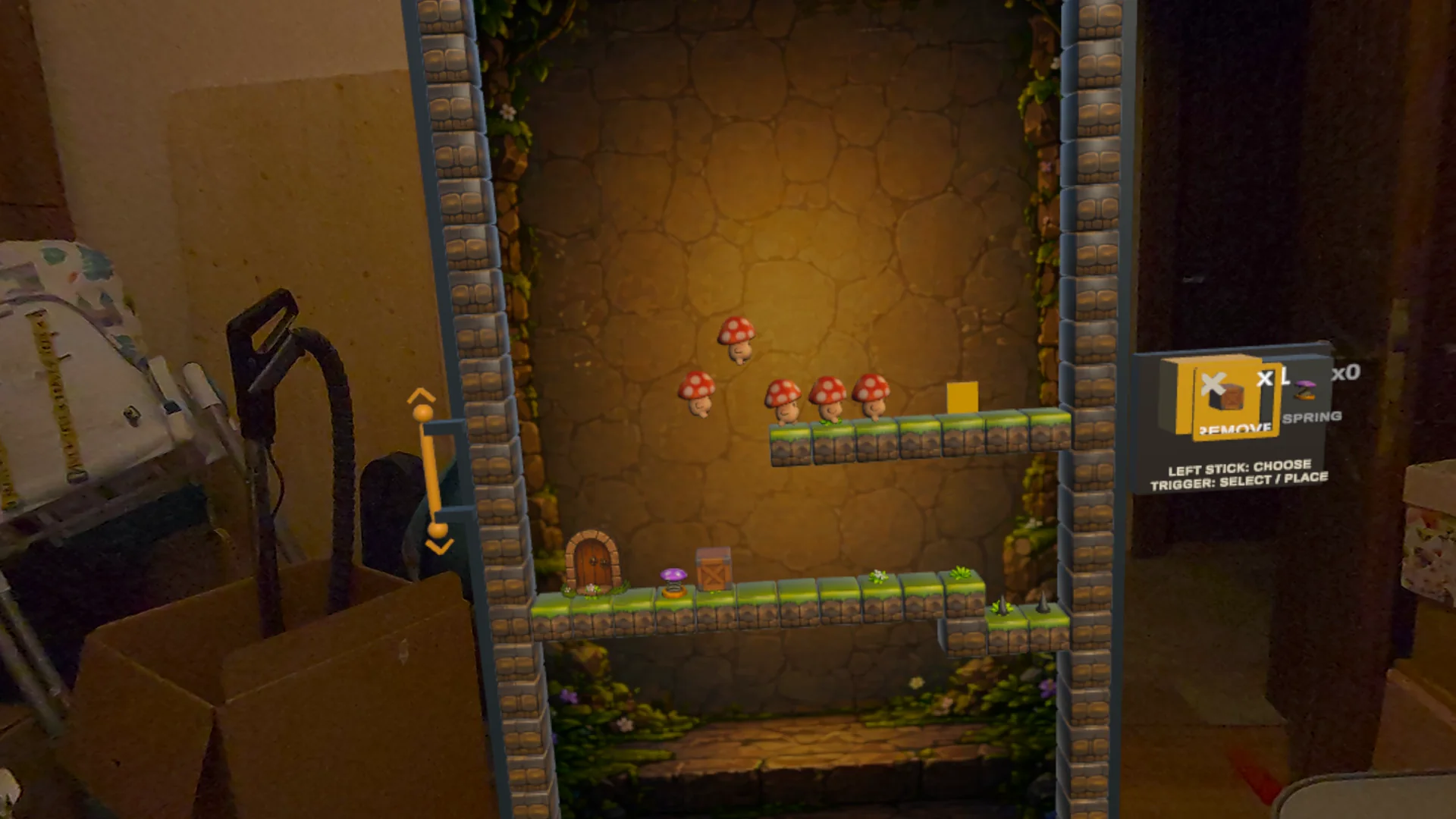
The mixed-reality build kept that central idea, but the interaction model, presentation, scene structure, controls, and spatial behaviour had to be implemented for Unity and Quest 3. The phone game supplied a working reference—not a finished VR project.
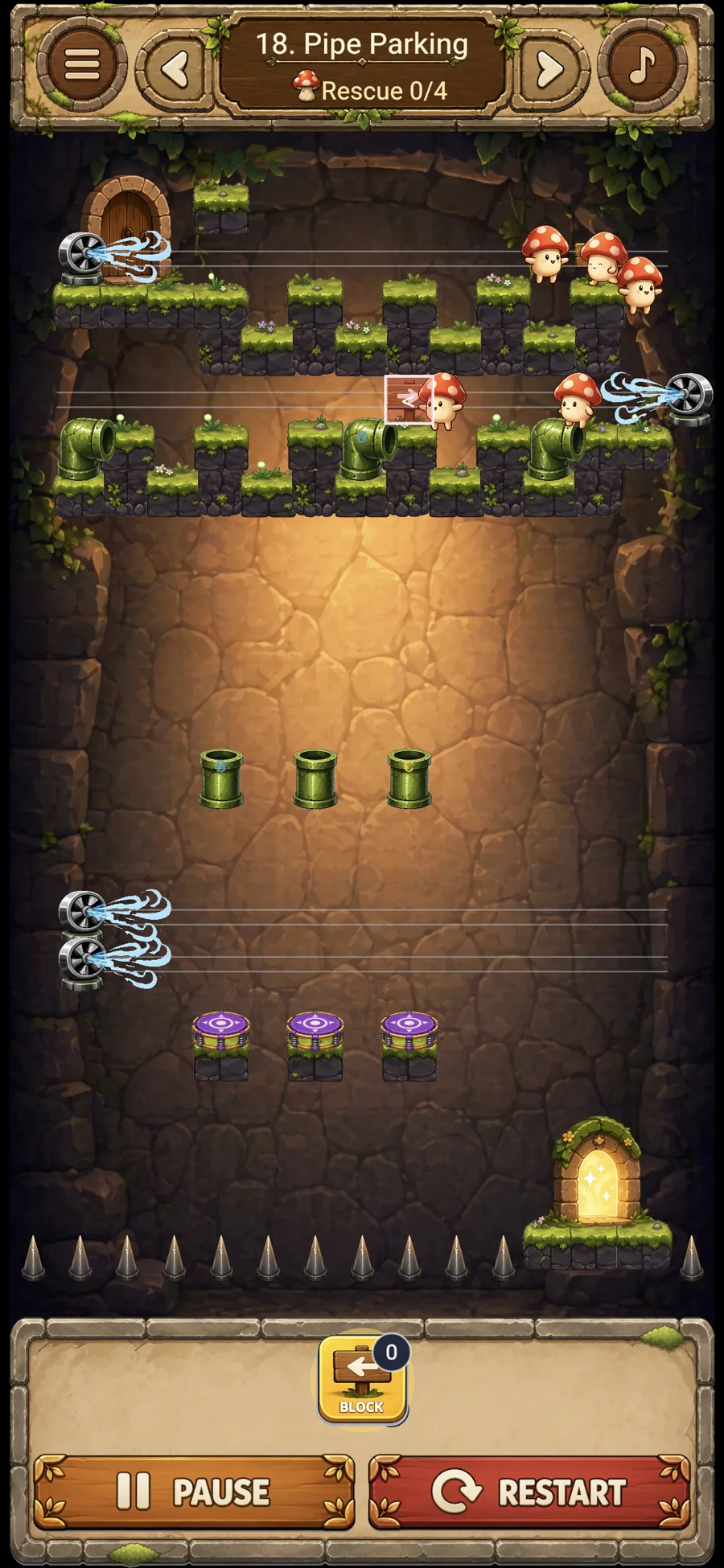
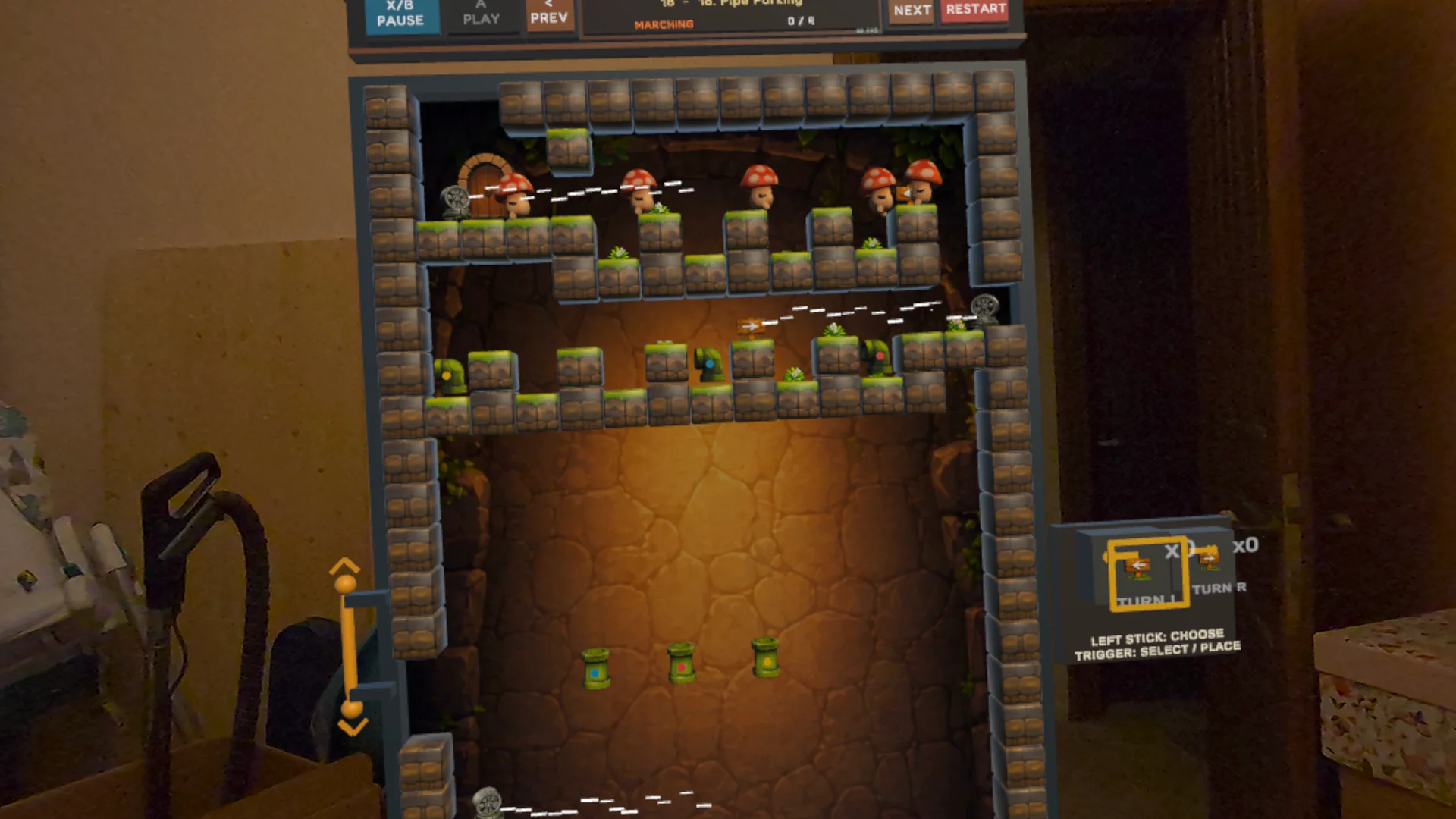
Pipe Parking, side by side.
These are two captures of level 18. The puzzle language survives, while the flat playfield becomes a physical-looking object anchored in the player's room.
Plan. Place. March.
A complete mixed-reality run: positioning a trampoline, starting the simulation, and guiding the mushrooms through the diorama.
One continuous idea.
Two distinct implementations.
The useful proof is not that an agent can copy a screen. It is that a creator can carry an existing project into a different engine and interaction model without losing the thread.
-
01
Alepou Canvas
Build the phone game
The original mechanics, levels, interface, and visual direction were developed as a portrait mobile game inside Canvas.
-
02
Creator craft
Author the spatial identity
Guy Entract directed the adaptation, created the 3D assets, and animated the mushroom characters for the diorama version.
-
03
Alepou Unity Bridge
Implement and iterate in Unity
The agent used the phone game and its code/design as source material while implementing the Quest 3 experience through the Bridge. That work included translating the interaction into spatial controls and integrating the supplied assets into a functioning mixed-reality build.
Who did what.
“Built with Alepou” describes a collaboration. It does not erase the creator, inflate the agent, or treat Unity and Quest as invisible plumbing.
Direction and authored craft
- Game concept and creative direction
- 3D asset creation
- Mushroom character animation
- Review, correction, and final judgment
Implementation and adaptation
- Unity implementation through the Bridge
- Translation of the phone design into spatial interaction
- Integration and iteration around supplied assets
- Building the playable Quest 3 experience
Workspace and control layer
- Canvas for the original mobile project
- Unity Bridge for sustained editor-side work
- Project continuity across longer agent sessions
- A visible place to direct and inspect the work
Engine and platform
- Unity 6
- Meta Quest 3
- Android/mobile build tooling
- OpenAI Codex
Outcome and process.
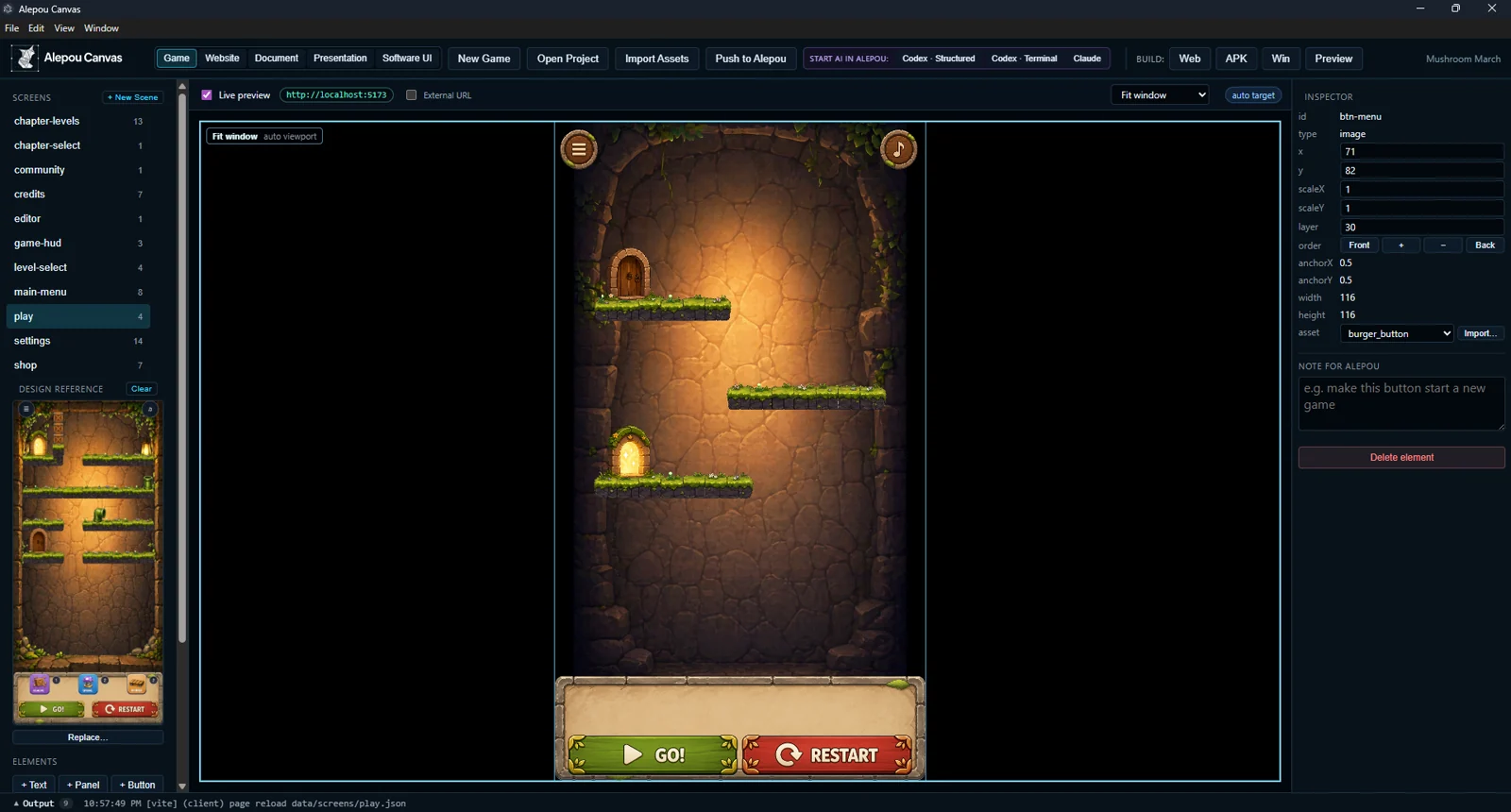
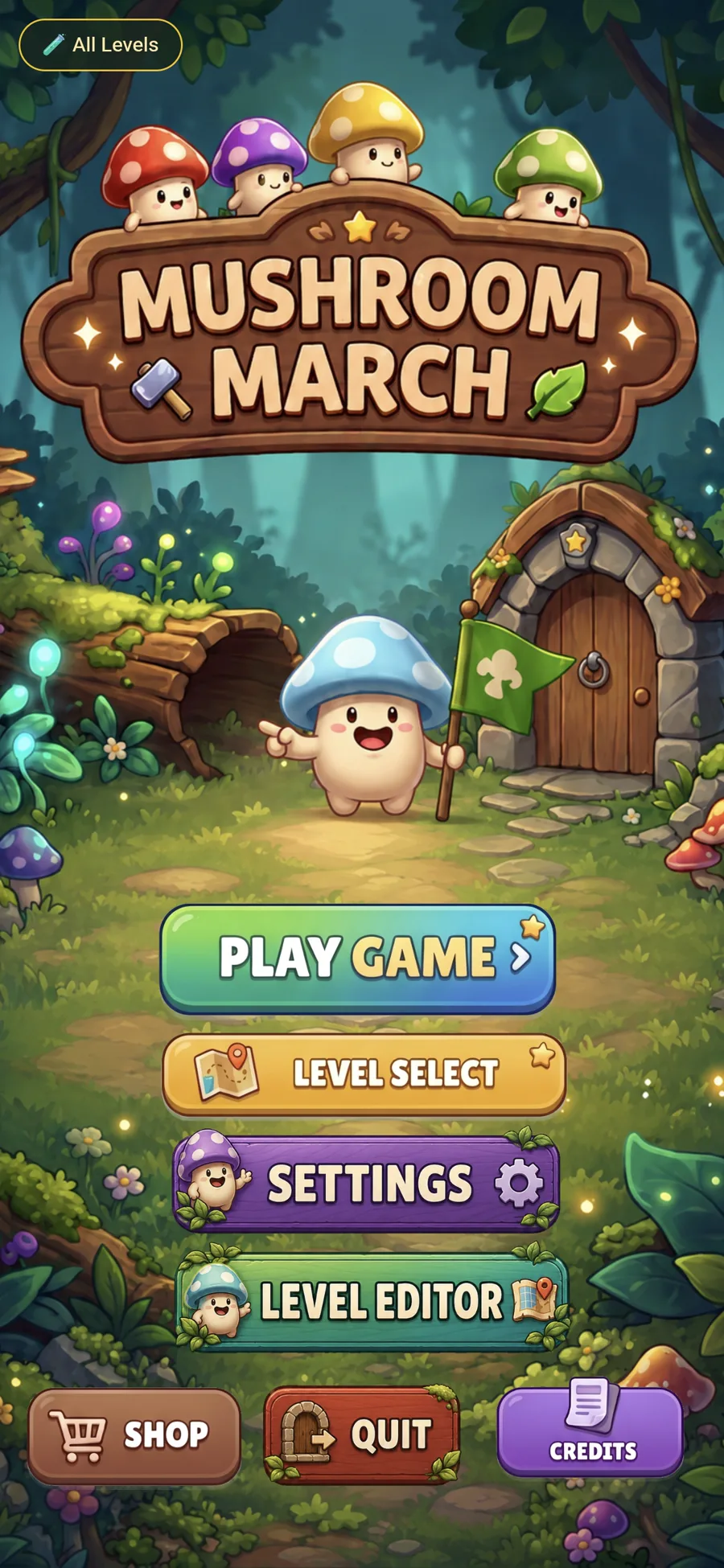
Selected creator-approved captures show the mobile project inside Canvas and the resulting experiences. Private session material is not required to make the work credible.
Enough to support the story.
Not enough to expose the workspace.
This page uses approved outcome captures, matching phone/Quest scenes, a live gameplay recording, and selected process media. Raw sessions, private project memory, local paths, and session identifiers stay out of the public evidence set.
- Outcome
- Phone and Quest builds shown
- Comparison
- Matched level 18 captures
- Process
- Canvas workspace shown
- Bridge evidence
- Held for safe redaction
- Verified
- 31 July 2026
Built together.
Released independently.
The mobile and Quest builds are separate products from Alepou and Canvas. Their store links, source status, versions, and release readiness will be added here when each one is final.